Digital Strategy & Brand Architecture for Emerging Markets. Partner with a Principal Consultant.

The Practical IT Guide for Foreign Companies Expanding Into France (2025 Edition):
6 min read
How to Set Up IT Infrastructure, Choose ISPs, Hire Technicians, and Ensure Compliance
Introduction
The prospects of opening a business in France in 2025 are very promising, including the ability to enter the second-largest economy in the European Union and to access a dynamic technological ecosystem. Nonetheless, to foreign firms (US, Spain, Italy, the UK, etc.), the process of negotiating the IT arrangement is threatening. The combination of developed digital infrastructure, strict regulations, and cultural characteristics of France is also unique, and it will not be possible to use the one-size-fits-all strategy. It is based on the experience of the IT Concierge, a pan-European IT deployment specialist company, and it gives the answer to the questions that every growing business needs to know: How do you install networks? Find reliable technicians? Select ISPs? But handle permits, cabling, and costs, VAT, and the French way of the working day?
Foreign companies will have to adjust their IT strategies in line with investments €30 billion by France towards digital projects, such as the France 2030 plan. Be it an integrator who opens a retail shop in Paris or a multinational that sets up operations in Lyon, appropriate IT infrastructure will be of essence to a smooth running of operations. This 2025 edition includes the most recent changes, such as fiber coverage of 70% of businesses and compliance changes under GDPR, that is implemented by the CNIL. We will discuss the work-related steps, traps to avoid, and the ways to simplify the process by working with local specialists. At the end, you will have a roadmap in terms of positioning your company to achieve a success in the competitive market of France.
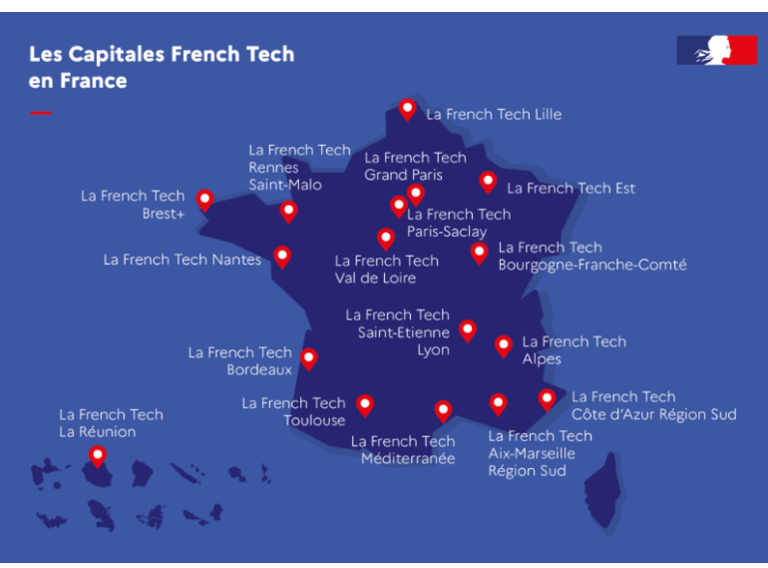
The strategic locations to expand are France tech hubs (like Paris, the largest startup campus in the world, with Station F), Bordeaux fintech, and Grenoble semiconductors.
Understanding the French IT Landscape
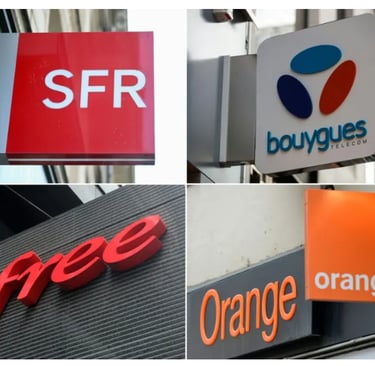
France has one of the most developed IT infrastructures in Europe, having more than 90 percent of the population under the high-speed broadband, and 5G is gaining momentum in major cities. In the case of foreign firms, it all depends on how it fits in a market that is dominated by four major suppliers, namely, Orange, SFR, Bouygues Telecom, and Free, that control close to all the fixed and mobile services. Orange has the greatest number of IP addresses of 20 million, then there is Free and SFR. This type of oligopoly implies the scarcity of options but the dependability thereof, particularly when it comes to companies that require fiber optic connections.
Geographical conditions of the country play a role: Large cities such as Paris and Marseille are very well covered, and the rural regions might need satellite options. Fiber is accessible to 70 percent of businesses in 2025, compared to the past years, which is necessary in operations that require lots of data. The US based foreign firms could feel dismayed by the concern of wired instead of wireless in core infrastructure due to the stability orientation of the French.
There is also a role of cultural aspects. French business insists on hierarchy and formal procedures, and thus, IT projects are characterized by elaborate planning and stakeholder buy-in. As the brochure of IT Concierge "Local Knowledge and Local Presence" (north 3-4) mentions, it is important to learn the regional differences, e.g., in the north there are stricter labor laws than in the south, where ecosystem is more innovative.
The infrastructure permits, such as cabling in old buildings, may stall such projects when not expected. Prices differ: In cities, it may cost between €50,000 and €100,000 to rent a mid-sized office, and VAT is 20 percent. Foreign entities can recover VAT at the EU directives, although they have to be duly registered.
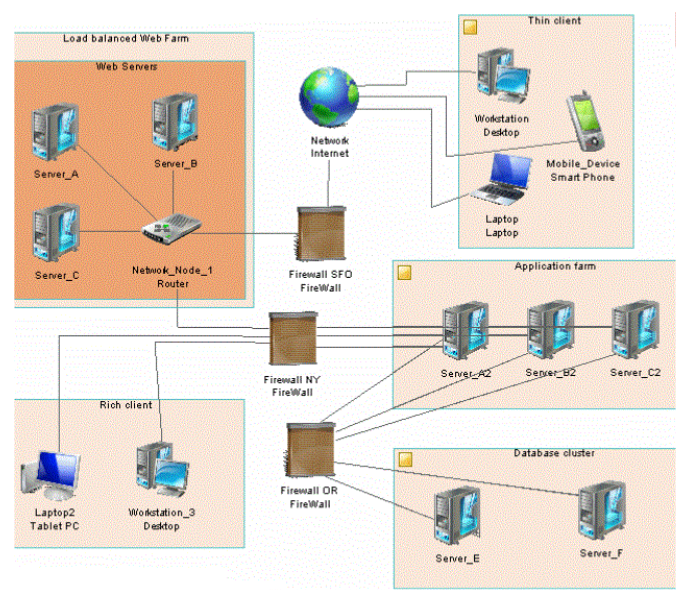
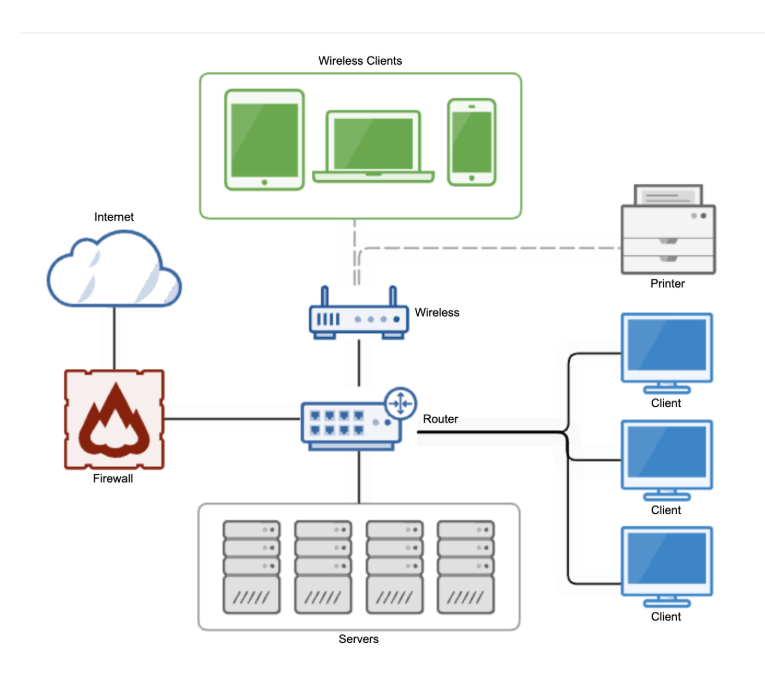
To imagine a classic business IT scenario: Servers, networks, and cloud integrations are the foundation.
Setting Up IT Infrastructure
IT infrastructure installation in France consists of a number of steps: Planning, Procurement, Installation, and Testing. Begin with site survey to determine current wiring and power requirements. In the case of cabling, the standard at high-speed requirements is Category 6 or fiber at an average cost of €20-€50/meter installed. External cabling or alterations in secured zones are permitted, however, apply through local mairies (town halls) or ARCEP in telecommunication approvals.
Foreign businesses do not always consider the presence of certified installers to comply with NF C 15-100 standards of electricity. The server rooms need climate control and racks that are in line with the EU energy efficiency provisions. According to the presentation by the IT Concierge on the subject of IT Project Planning (page 7), a staged design to deploy to maintain strategy is the best way to minimize the downtimes.
In case of cloud integration, France prefers EU-based providers such as OVHcloud that will meet the data sovereignty requirement. Remote-hands services: This would play a critical role in providing support to non-resident firms.
Other obstacles, such as language differences and supply chain delays, are common, this can be overcome by obtaining hardware through local distributors like Ingram Micro. Plan ahead on the unexpected expenses, like switching to routers that are 5G compatible.
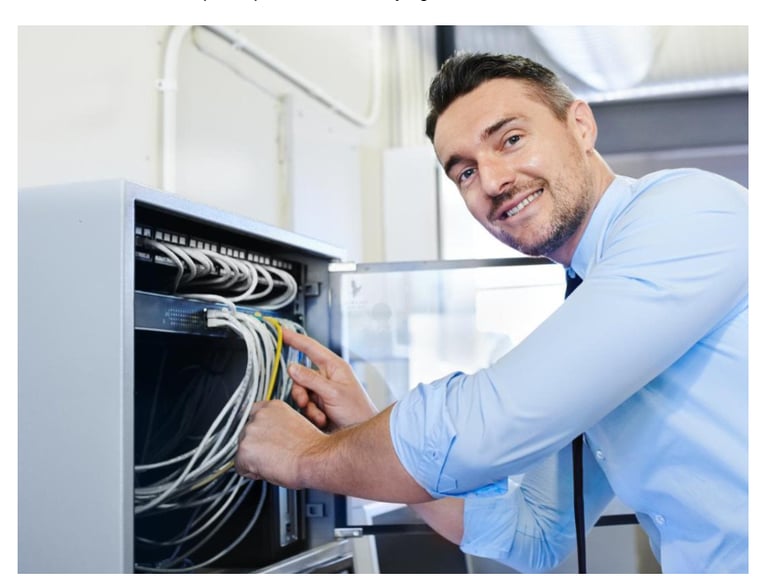
Realistically, a US retailer going to Paris may require structured cabling of POS systems to be integrated with VoIP phones. Technicians will be involved in pulling the cables in the conduits, which end in patch panels, and certifying the network.

Choosing the Right ISP
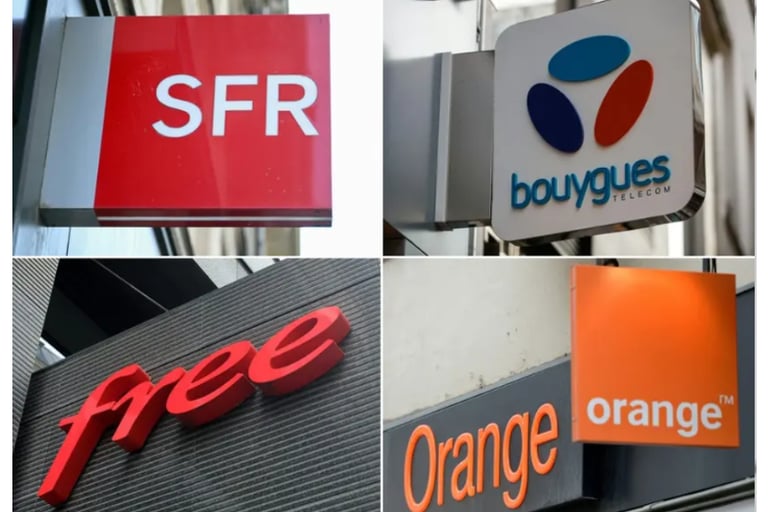
The choice of the ISP in France is essential in terms of reliability and speed. The companies that will be the best providers to businesses in 2025 are Orange, Bouygues Telecom, SFR, and Free. Orange is applauded for its quality, and it is more expensive, Bouygues has good integration on mobile, SFR has competitive packages, and Free is cheap but might not have enterprise support.
The lowest cost of business plans is €30/month with basic ADSL, and €200 and above with symmetric fiber and SLAs. City coverage, checking through ARCEP maps, fiber is extensive. In the case of integrators, make a priority of providers with API entry to IoT.
VAT inclusive pricing and renewing of contracts (12-36 months) should be taken into consideration by foreign companies. Orange has Fiber to Business, which offers customers 4,000 municipalities by year-end.
Project management is key: Use tools like Microsoft Project to align timelines, with typical setups taking 4–8 weeks. Partnering with firms offering France-Spain-Portugal coverage ensures scalability.
Hiring Reliable Technicians
Recruiting IT technicians in France involves negotiating labor laws in the Code du Travail. In 2025, the salary of the junior IT engineer will be €35,000-€40,000/year in Paris, with experts earning more. The procedure: Place adverts on websites such as LinkedIn or Pole Emploi, interview, and provide CDI (permanent) contracts.
Hires of foreign nationals can be eligible for the French Tech Visa, with a minimum requirement of €39,582. Social charges (40-50% of salary) are part of the costs, and the overall employer cost is €50,000+.
Remote-hand outsourcing of services such as IT Concierge does not require full-time employment. Difficulties: 35 hrs work and powerful unions imply that flexible work schedules are the most important.
In the case of expansions, such vet certifications as Cisco CCNA. According to some recent X posts, there is difficulty in recruiting bilingual techs with foreign companies.
Ensuring Compliance and Permits
Compliance is non-negotiable, with GDPR as the cornerstone, enforced by CNIL. Foreign companies must appoint a DPO if processing EU data. CNIL's 2025–2028 strategy emphasizes AI compliance.
Permits for cabling: RICT certification for installers. Data centers must meet energy standards.
VAT at 20% applies to IT services; foreign firms register via DGFiP for refunds. E-invoicing mandates start in 2026.


Managing Costs, VAT, and Budgeting
IT setup costs: small offices (€10,000-€50,000) and €5,000 to purchase hardware, €3,000 to install cables, and €10,000 for labor. The VAT is 20%, which is refundable to the entities registered to pay VAT.
Budget breakout: 40% of the hardware, 30% of the installation, 20% of compliance, and 10% of ongoing.
The French Way of Working
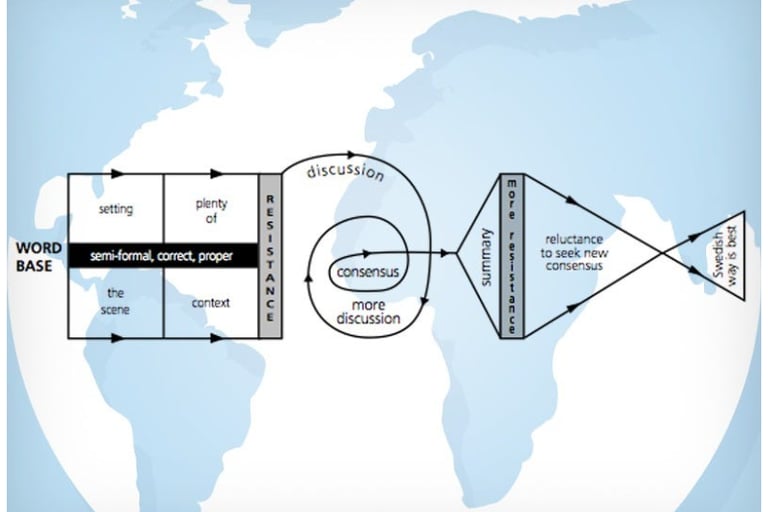
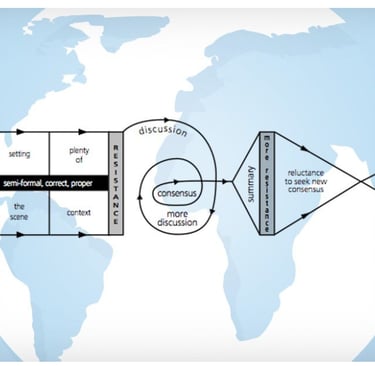
The French work culture has a work life balance with 35 hours working and meetings. IT projects are consensus building; be formal in communications.
Examples of negotiation styles put emphasis on direct, but courteous styles.
.
How IT Concierge Can Help
IT Concierge is a company that deals with cabling, network deployments, server rooms, remote hands, and project management in France, Spain, and Portugal. We have Local Knowledge and Local Presence that guarantee smooth expansions. We will be happy to hear about solutions that are specific to us.
© 2026. All rights reserved.


"Part of the Stuart Henderson Professional Network"